Published by the Philippine Collegian on July 14, 2020
See full story here: https://phkule.org/article/235/paragas-ki-lumad-defenders-against-state-terrorism
The nightmares keep Mira* at night—the sounds of guns and bombs still ringing in her head, no matter how she tries to shrug that memory away.
“Nagkain kami, tapos bigla na lang may dumating [na militar] doon sa aming paaralan. Sinipa yung kaldero na may ulam tsaka kanin. Sinabi nila na umalis kami kasi yung paaralan namin ay terorista raw,” she recalled, in barely a whisper, as though fearing something might happen as she said those words.
“Yung ibang mga teacher namin, umiiyak na,” she added. “Tapos kami ay nagkakagulo, parang nawala na kami sa [sarili].” The severe trauma and anxiety caused by military attacks witnessed by Lumad students and teachers continue to haunt them as these assaults still happen after years of their finding, if only indefinitely, a sanctuary. Every forum, intervention, activity, and protest is a way for them to cope.
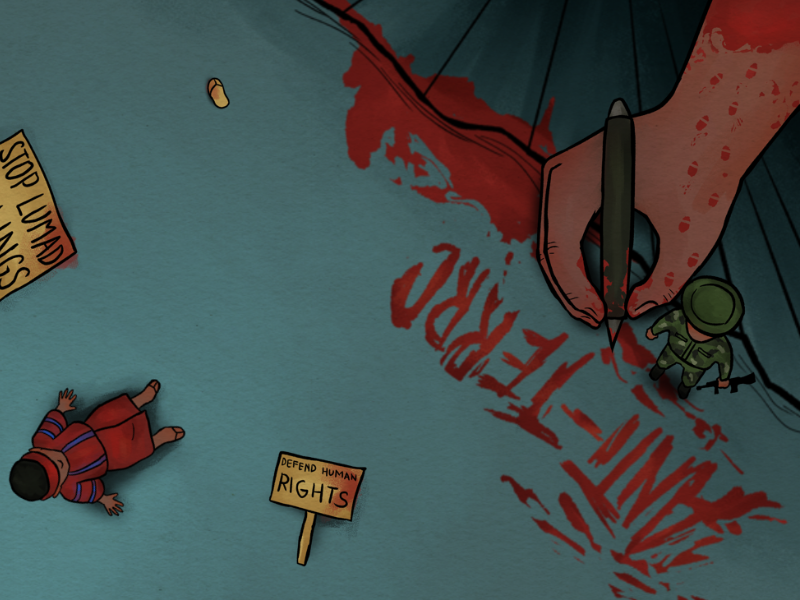
But, instead of receiving aid to recover from the horrors they have gone through, there comes another cause for worry. The Anti-Terrorism Law, which allows for the arrest without warrant of suspected terrorists—a title that the Lumad have been victims of being tagged—is nothing but a trigger that will give the state license to strike without running out of bullets.
Despite the alarm raised by human rights defenders over the government’s draconian measures to stifle dissent, President Rodrigo Duterte signed the controversial bill last July 3. Contrary to its name, this would worsen already prevalent terrorism—that which is being perpetrated by the state—and sink indigenous refugees deeper into danger while barring defenders from keeping them afloat.
Lumad schools have experienced more than 700 cases of threats and harassment since 2016, according to Save Our Schools (SOS) Network—recording the attacks as one of UNICEF’s six grave child’s rights violations in the world in 2018. Out of 215 schools in Mindanao—with 8,400 Lumad students and 600 teachers—163 have been shut down, displacing 5,000 individuals.
To document and report out human rights violations amid military encampment, the SOS Network was formed, connecting 200 organizations, universities, churches, and individuals who take care of the Bakwit school.
“Ang Bakwit school ay isang porma ng protesta—ng isang movement ng mga kabataang Lumad upang ipakita kung ano ba yung tunay na kalagayan ng mga kabataang Lumad doon sa Mindanao,” Rius Valle, SOS Spokesperson since 2012, explained at the Saglit, May Bakwit forum last June 12. The relentless fight against the crackdown still continues even under lockdown.
“Hindi huminto ang mga atake at mas lumalala pa ngayong may pandemya. Mula March 15 hanggang May 31, nakapagtala ang SOS ng 32 incidents of attacks on Lumad schools,” Valle said, listing types of violations—trumped-up charges, forcible closure, fake and forced surrender, illegal arrest, aerial bombing, forced evacuation, threat, harassment, and intimidation.
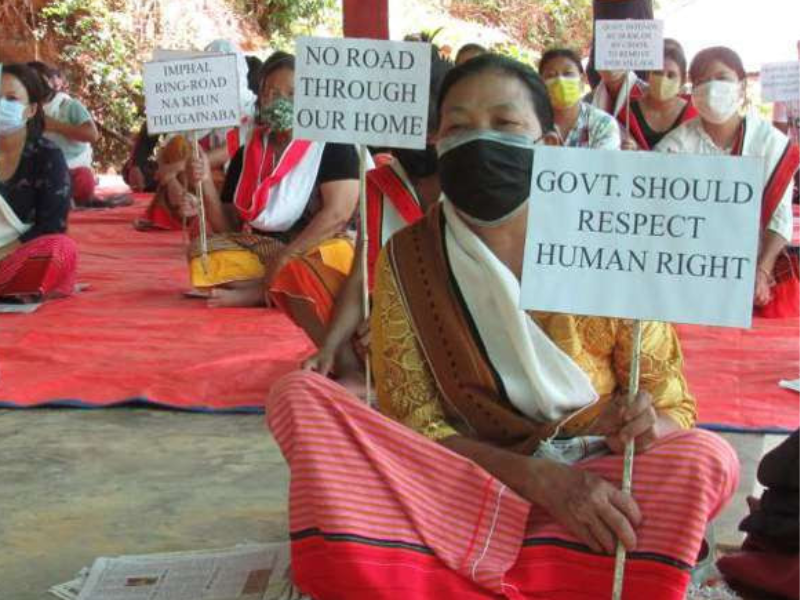
Students and teachers from the Bakwit school and SOS volunteers joined the indignation rally last July 4 in defiance of the administration’s anti-people policies that legalize state-sanctioned violence.
“Ang pinaka-inspirasyon ng network ay ang mga batang Lumad mismo na patuloy na lumalaban hindi lang para sa kanilang karapatan sa edukasyon ngunit para depensahan din ang buhay ng susunod na henerasyon,” Valle said. “Ang laban nila para sa paaralan ay laban din nila para sa mundo at sa susunod na salinlahi.”
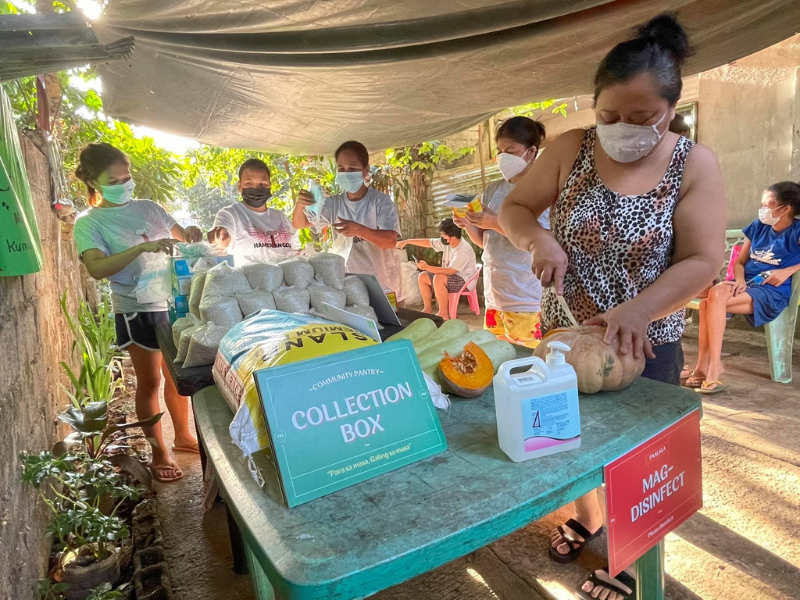
Rather than protecting them from the virus, the lockdown has aggravated the vulnerability of Lumad communities to health risks as the military round up students in Mindanao without social distancing or health protocols. On top of that, the Lumad, without their land to farm, are already struggling with shortage of food and resources, most of which are given by volunteers and donors.
“Binabahay-bahay ng state forces ang mga estudyante, kinukuhanan ng video, at ginagamit sa platform nila para mag-spread ng fake news and black propaganda against us,” said Rose Hayahay, a volunteer teacher in the Bakwit school after the Department of Education shut down the Salugpongan Ta’ Tanu Igkanogon Community Learning Center, Inc. in 2019.
The fear lingers as they are hindered from holding the assailants accountable, as well as the worry that being near government agencies might threaten their security. Several teachers, like Jolita Tolino, are also facing trumped-up charges for being vocal against mining plantations in Mindanao. In addition, three among the arrested Pride 20 protesters last June 27 are volunteer teachers.
“Hindi bago, pero hindi dapat siya normal na pangyayari sa buhay ng isang bata o isang teacher pero nagiging normal dahil sa sunod-sunod na atake at pangha-harass,” Hayahay said. The school channels their dismay into delivering mass-oriented and scientific education and informs the youth of current news which brings them worry for their families in Mindanao.
“Nakakatakot naman talaga, pero i-convert natin siya sa gusto nating marating—sa mapagpalayang lipunan na walang diskriminasyon, na may libreng edukasyon, lupa sa magsasaka, at walang kontraktuwalisasyon,” Hayayay added, with determination, highlighting the solidarity of the Lumad with other sectors who also face discrimination and injustice.
The vagueness of the definition of terrorists in the newly signed law can be weaponized against dissenters, given that red-tagging has been used to endanger critics even back then. Sections 12 and 13, in particular, prevent non-state-recognized humanitarian organizations from aiding tagged terrorists.
Prince Turtogo, NCR Chairperson of KATRIBU Youth—which supports indigenous peoples and promotes their advocacies through campaign, discussion, and mobilization, among others—shares their struggle as they have once been red-tagged in local news by a military officer, followed by an unidentified individual, and declared persona non grata after he had joined a fact-finding mission in a militarized community in Cagayan.
“Dahil sa pampulitikal na kalagayan ng bansa, maraming kabataan ang namumulat at nagpapasyang makilahok sa mga pagkilos,” he said, as KATRIBU relentlessly called to repeal the Anti-Terrorism Law. Even minors are attacked, including a member arrested as part of the Pride 20. Such is a threat in the face of the proposal to lower the minimum age of criminal responsibility, passed on second reading in January 2020.
Turtogo enumerated the tasks the organization continues to do: “Pagkasa ng mga pag-aaral. Paglahok sa malaking mobilisasyon. Pagpapalawak ng mga kampanya online.” But, for him, the fight does not stop there.
The role of youth defenders, volunteers, and humanitarian groups is crucial, in utilizing creative media for campaigns and debunking statements that misrepresent and malign indigenous people. The fight for their rights carries on until the complete eradication of anti-minority policies and measures, including foreign investments in large-scale mining and dam construction on their lands.
Like Hayahay said, “Kahit na humaharap tayo sa kaliwa’t kanang panunupil sa ating mga karapatan ... sana ‘wag tayong panghinaan ng loob. Ituloy natin ang laban tungo sa tagumpay, dahil kung hindi pa tayo nagtatagumpay, hindi pa tapos ang laban.”
Until the Lumad are given the land they rightfully deserve, and the Filipino people are free to speak without fear for their lives and the sectors they serve, voices will continue to rise like unsurmountable waves and drown out any lunging threats—changing the currents until the tides bring them justice, finally, after seeking refuge from the storms.
###
Some other works for the Philippine Collegian